1
Failed Underlayment Beneath Tile
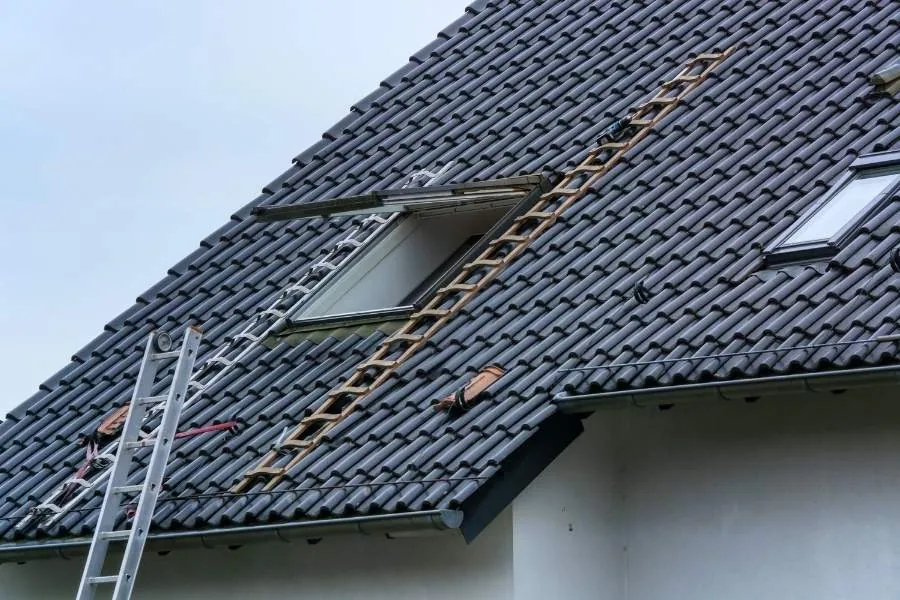
Serious Clay and concrete tile can last 50 years or more, but the felt or synthetic underlayment beneath it usually gives out after 20 to 30. Once it gets brittle and cracks, water that gets past the tiles runs straight onto the decking. From the street, the roof still looks fine.
Why it happens here Arcadia has thousands of tile roofs from the 1980s through the 2000s, many on Rancho and Baldwin Stocker estates. Years of 90°F+ heat cook the felt under the tile, and long droughts mean nobody notices leaks until an atmospheric-river storm dumps several inches at once. That's why we get so many calls after the first big storm of the season. Homeowners are shocked that a roof that looks perfect is leaking in three rooms.
Signs to watch for - Ceiling stains showing up after the first heavy rain of winter
- Brittle, black felt visible at the eaves or under cracked tiles
- Musty attic smell or darkened roof sheathing
- Water marks along interior walls under valleys
- Tiles sliding or nails pulled loose at the edges
Local patterns We see this most on 1980s–2000s tile homes in Lower and Upper Rancho, Baldwin Stocker and Santa Anita Oaks, especially on complex roofs with lots of valleys. It's also common on older Spanish Revival homes near First Avenue whose tile was relaid decades ago.
Our fix Usually a tile lift-and-relay: we remove the tiles, install new high-temperature underlayment and flashing, then reset your original tile and replace broken pieces with matching profiles.
2
Windstorm and Fallen-Limb Damage
Emergency Santa Ana and downslope canyon winds can lift shingles, crack or blow off tiles, and drop heavy oak, sycamore or pine limbs onto the roof. That can break the decking and leave the house open to rain within hours.
Why it happens here Arcadia's mature tree canopy is one of the best things about the city, but it's a liability in a windstorm. The 2011 windstorm toppled thousands of trees across Arcadia, Pasadena and Temple City, and smaller wind events still crack tiles every season. Gusts coming down from the San Gabriels hit foothill neighborhoods hardest, and low-pitched ranch roofs with old fasteners are especially easy to peel up.
Signs to watch for - Shingles, tile pieces or ridge caps in the yard
- Branches resting on or punctured through the roof
- Daylight visible in the attic
- Sudden leaks during or right after wind and rain
- Bent gutters or torn flashing
Local patterns This is common in the Highlands, Highland Oaks, Santa Anita Oaks and the Peacock Lane area near the Arboretum, where big trees overhang roofs. It peaks in November through January, when Santa Anas can be followed by winter rain.
Our fix Emergency tarping and debris removal to stop water from getting in, photo documentation for your insurance claim, then permanent repair of the decking, underlayment and roofing.
3
UV-Worn and Curling Asphalt Shingles
Moderate Composition shingles lose their protective granules and oils in constant sun. They curl, crack and get brittle well before their rated life, which leaves the mat exposed and lets wind lift the tabs.
Why it happens here Arcadia gets intense sun most of the year and long stretches of summer days in the 90s to 100s. South- and west-facing slopes on single-story ranch homes take the full beating. Many of these homes were re-roofed with 3-tab shingles in the 1990s, sometimes right over the old shake, and that trapped heat and shortened shingle life even more. A lot of those roofs are now at or past the end.
Signs to watch for - Shingle edges cupping or corners curling up
- Heavy granule buildup in gutters and downspouts
- Bald or shiny patches on south-facing slopes
- Cracked or missing tabs after windy days
- Visibly uneven or wavy roof surface
Local patterns Most common on post-war ranch homes in Santa Anita Village, Camino Grove, Live Oak/South Arcadia and the Baldwin Avenue corridor. We also see it on HOA-managed condos and townhomes south of Huntington Drive.
Our fix Spot repairs if the roof is young. On aging roofs, a full tear-off with new decking where needed, synthetic underlayment and architectural shingles rated for heat and wind.
4
Flat and Low-Slope Roof Ponding and Coating Failure
Moderate Flat sections like additions, patio covers, garages and commercial roofs rely on membranes or coatings. When those crack or blister, or when water pools and won't drain, leaks develop at seams and penetrations.
Why it happens here Many Arcadia ranch homes have tar-and-gravel or rolled-roofing additions from the 1960s and '70s. The commercial strips along Baldwin Avenue, Huntington Drive and Live Oak Avenue run on aging built-up, mod-bit and TPO roofs. Summer heat breaks down coatings, and tree debris blocks drains and scuppers. When a big winter storm hits, ponding water finds every weak seam.
Signs to watch for - Standing water 48 hours after rain
- Blisters, bubbles or alligatored coating
- Open seams or loose flashing at walls
- Leaks around HVAC units or vents
- Gravel worn away, exposing the bitumen
Local patterns Typical on ranch additions and patio covers citywide, older strip centers along Live Oak and Baldwin, and HOA townhome complexes in South Arcadia with low-slope roofs and shared drainage.
Our fix Seam and flashing repair, cleaning drains and scuppers, and re-coating with SCAQMD-compliant products. When the roof is too far gone, replacement with modified bitumen or a reflective TPO membrane.
5
Fire-Zone Vulnerabilities: Wood Shake, Open Vents and Debris
Serious In wildfire country, roofs mostly fail because of embers, not flames. Wood shake, open or unscreened vents, gaps at tile eaves and gutters packed with dry leaves can all let embers in or catch fire.
Why it happens here North Arcadia backs directly onto Angeles National Forest. The 2020 Bobcat Fire burned in the mountains right above Arcadia and Monrovia, and the 2025 Eaton Fire devastated nearby Altadena. Much of the area north of Foothill Blvd is mapped as a Very High Fire Hazard Severity Zone, and insurers are reacting with non-renewals and higher premiums. A lot of older ranch homes still have shake or old vents.
Signs to watch for - Remaining wood shake on the main roof or additions
- Large-mesh or unscreened attic and eave vents
- Open bird-stops at tile eaves
- Gutters and valleys full of dry leaves and needles
- An insurer requesting a roof inspection or condition report
Local patterns Concentrated in the Arcadia Highlands, Highland Oaks, upper Rancho/Canyon areas and homes along the Monrovia border near Foothill Blvd, where brush and canopy sit closest to the forest edge.
Our fix Moving off shake to a Class A tile, shingle or stone-coated steel assembly, plus ember-resistant vents, sealed eave closures and a documented condition report for your insurer.
6
Worn Flashing at Chimneys, Skylights and Solar Mounts
Moderate Flashing is the metal or membrane that seals the joints where the roof meets chimneys, walls, skylights and penetrations. When it corrodes, comes loose or its sealant dries out, water runs straight into the framing.
Why it happens here Arcadia's 1950s and '60s homes often still have original chimney and skylight flashing. Minor earthquakes along the Sierra Madre and Raymond faults can shift masonry chimneys and pull flashing apart. Rooftop solar is common here too, and mounts installed without proper flashing are a frequent leak source, especially on tile.
Signs to watch for - Leaks around a chimney, skylight or solar array
- Cracked caulk or rusted metal at roof joints
- Stains on ceilings next to fireplaces
- Condensation or drips around skylight frames
- Cracked tiles around solar standoffs
Local patterns Common on original ranch homes in Santa Anita Village and Camino Grove, older homes downtown near First Avenue, and homes with solar throughout the city. Problems usually show up after the first heavy storm.
Our fix Remove and reinstall flashing with new counter-flashing or skylight kits, reflash solar mounts, and coordinate panel removal and reinstallation when we need access to the roof underneath.
7
Clogged Gutters, Dry-Rotted Fascia and Rafter Tails
Minor When gutters overflow, water gets behind the fascia and soaks the exposed rafter tails on wide ranch-style eaves. The wood rots, gutters pull away and pests can get in.
Why it happens here Arcadia's oaks, sycamores, deodars and pines drop debris all year. A lot of homes still have the undersized gutters they were built with in the 1950s, and those can't keep up. Wide eaves on post-war ranch homes leave lots of wood exposed to sun and moisture. It's minor at first, but rot spreads into the roof deck if nobody deals with it.
Signs to watch for - Gutters overflowing or sagging during rain
- Peeling paint or soft spots on the fascia
- Dark or crumbling rafter tails at the eaves
- Plants growing in the gutters
- Water stains on the stucco below the eaves
Local patterns Most noticeable under heavy canopy in Santa Anita Oaks, the Peacock area near the Arboretum, Highland Oaks and Camino Grove, on single-story ranch homes with wide eaves.
Our fix Clean gutters and valleys, replace rotted fascia and rafter tails, and recommend properly sized gutters during maintenance or as part of a re-roof.